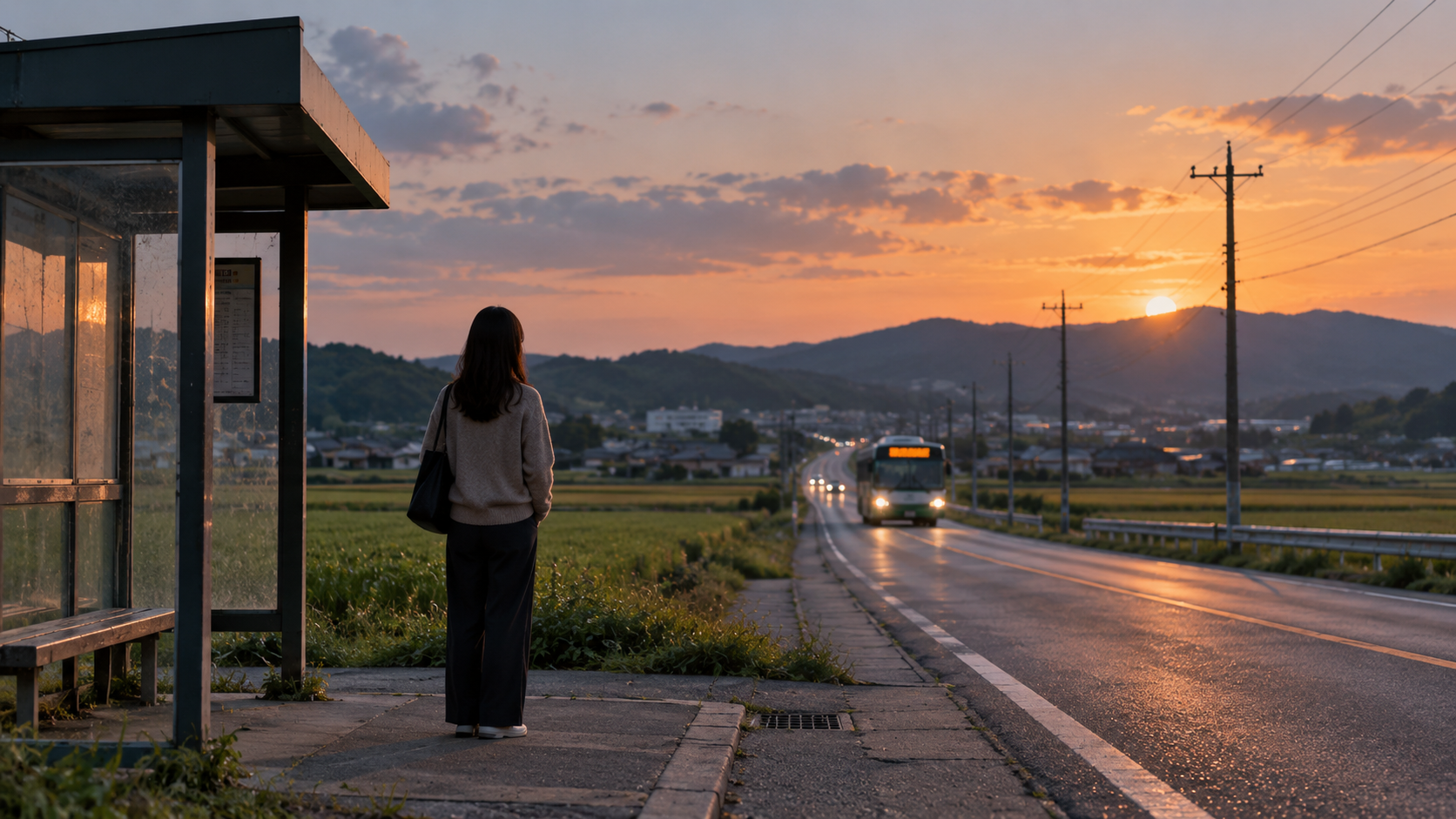
Some days feel exhausting even when nothing particularly bad has happened.
You wake up, get ready, work, and return home, only to realize that the entire day has disappeared. You were busy, but it is difficult to remember how much of that time truly belonged to you.
The Korean drama My Liberation Notes begins with this kind of ordinary fatigue.
Rather than relying on dramatic events, the series pays attention to long commutes, repetitive work, family routines, and the quiet exhaustion that can build inside everyday relationships.
At first, the story may seem slow. As the episodes continue, however, a facial expression or an unfinished sentence can begin to feel uncomfortably familiar.
This article contains light spoilers about the characters and themes of the series.
My Liberation Notes: Series Information
- Title: My Liberation Notes
- Korean title: 나의 해방일지
- Network: JTBC
- Original run: April 9–May 29, 2022
- Episodes: 16
- Director: Kim Seok-yoon
- Writer: Park Hae-young
- Main cast: Lee Min-ki, Kim Ji-won, Son Suk-ku, and Lee El
The story follows three siblings—Yeom Chang-hee, Yeom Mi-jeong, and Yeom Gi-jeong—who live with their parents in Sanpo, a fictional area outside Seoul.
Every day, they travel long distances to work in the city and return home with little energy left. Their lives are not defined by one great tragedy, yet none of them can honestly say that they feel fulfilled.
A mysterious man known as Mr. Gu also lives nearby. His quiet presence gradually becomes connected to Mi-jeong’s desire to escape the emptiness she has carried for a long time.
Watch the Official Trailer
The trailer introduces the Yeom siblings and Mr. Gu—four people moving through ordinary days while quietly searching for their own form of liberation.
▶ Watch the official trailer on YouTube
When Commuting Takes the Whole Day
The long commute experienced by the three siblings is one of the most distinctly Korean parts of My Liberation Notes.
Many people who work in Seoul live far beyond the city center, where housing may be more affordable. Their daily journey can involve a local bus, a subway transfer, and another walk before they finally reach the office.
For the Yeom siblings, commuting is not simply a way to get from home to work. It consumes much of their time and energy.
They leave home early, spend the day working in Seoul, and make the same long journey back. By the time they arrive home, most of their energy is already gone.

The weekend is supposed to feel different. Yet after catching up on sleep and finishing household tasks, Monday quickly returns.
The characters are not lazy or unwilling to improve their lives. They are doing their best to remain responsible. Even so, their effort does not always feel like progress.
The series left me with a simple question:
How much of today did I actually live as myself?
It is possible to spend the entire day fulfilling roles—as an employee, a daughter, a sibling, or the person who takes care of what needs to be done—while barely noticing what you wanted or how you felt.
Three Siblings, Three Different Forms of Liberation
Chang-hee, Mi-jeong, and Gi-jeong live under the same roof, but each one wants to be liberated from something different.
Chang-hee talks about money, cars, work, and success. His frustration may appear materialistic, but beneath it lies a fear shared by many adults: the fear of working hard without ever moving forward.
Gi-jeong wants to be loved. She is tired of loneliness, yet her expectations and disappointments make relationships difficult.
Mi-jeong rarely expresses what she feels. She remains quiet at work and at home, but her silence contains a deep sense of emptiness. She does not simply want a more exciting life. She wants to feel fully alive within her own life.
Their differences suggest that liberation cannot look the same for everyone.
For one person, it may mean financial independence. For another, it may mean love or freedom from comparison. For someone else, liberation may begin with finally admitting how tired and unfulfilled they have become.
“Worship Me”: Understanding Chuyang
One of the most memorable words in My Liberation Notes is chuyang (추앙).
It is commonly translated into English as “worship” or “adore.” In everyday Korean conversation, however, it is an unusually grand and formal word. It is not something people ordinarily ask of a romantic partner.
That is why Mi-jeong’s request sounds so unexpected.
When she asks Mr. Gu to “worship” her, she is not asking to be treated like a god. She wants something more emotionally complete than casual affection.
She wants to be accepted without having to prove that she is cheerful, successful, interesting, or easy to love.

As the story develops, Mi-jeong’s idea of chuyang begins to resemble wholehearted support—the act of seeing another person without constantly judging, correcting, or measuring them.
It is not a promise to solve every problem. It is closer to telling someone that their existence matters even before they become happier, more successful, or easier to love.
In relationships, we often attach conditions to affection. We want the other person to become more thoughtful, more responsible, or more responsive to our needs. When those expectations are not met, disappointment follows.
What makes Mi-jeong and Mr. Gu’s relationship compelling is that they do not try to turn each other into perfect people. They cannot erase each other’s wounds, but they begin to keep one another from facing those wounds entirely alone.
The Comfort of Someone Who Does Not Try to Fix You
My Liberation Notes often focuses on small moments rather than dramatic declarations.
The characters walk together, share meals, sit in silence, and listen. Because the series is so restrained, these simple actions begin to carry unusual weight.
Sometimes the presence of another person is more helpful than a perfect solution.

There is comfort in someone who listens without immediately judging you, who recognizes the effort behind an ordinary day, and who does not abandon you when you are struggling to like yourself.
The series also made me wonder whether that kind of support must always come from another person.
Perhaps we can offer some of it to ourselves.
We may fail to complete everything we planned. We may move more slowly than the people around us. Refusing to treat ourselves as failures because of that may also be a form of chuyang.
Family Closeness Without Many Words
The Yeom family lives together, eats together, and works together, but they rarely explain their feelings directly.
This may feel emotionally distant to some international viewers. Yet the family’s affection often appears through actions rather than conversation.
Meals are prepared. Work is shared. Someone quietly waits for another person to return home.
Their home is not especially warm or expressive, but it contains a practical form of care that is familiar in many Korean families.
The drama does not idealize this silence. It also shows how difficult it can be when people live close together but do not know how to speak honestly.
That tension makes the family feel convincing. Love exists in the house, but understanding does not always arrive automatically.
Liberation Does Not Always Mean Leaving Everything Behind
The word “liberation” can suggest a dramatic escape—a new job, a new city, or an entirely different life.
The characters in My Liberation Notes do not suddenly become different people. They continue working, worrying about relationships, and facing days that do not go according to plan.
What changes is their willingness to look more honestly at their own feelings.
They begin to recognize what exhausts them, why they feel trapped, and what they actually want. They also begin to notice that a day does not need to be perfect to contain one meaningful moment.
Liberation may begin in a very small space: a quiet walk, a meal eaten without rushing, a few minutes with no obligation, or the courage to refuse something you never wanted to do.
Writing My Own Liberation Notes
By the end of the series, I was thinking less about the characters’ final destinations and more about my own ordinary days.
What do I want to be liberated from?
When do I feel most at ease?
Which relationships make me feel smaller, and which ones allow me to breathe?
Tomorrow will still bring responsibilities. There will still be unfinished plans and moments that do not work out as expected.
But if I make even a little room to notice my own feelings, the day may no longer be exactly the same as the one before it.
I do not need to become completely happy overnight. I do not need to solve every problem before treating myself with kindness.
Perhaps the smallest form of liberation is simply looking at the person who made it through another ordinary day and deciding not to be so harsh with them.
What would you like to be liberated from?
Where Can You Watch My Liberation Notes?
As of October 2026, viewers in South Korea can check My Liberation Notes on TVING and Netflix.
Netflix availability may vary by country. International viewers can open the official Netflix title page to check whether the series is currently available in their region.
▶ Watch My Liberation Notes on TVING
▶ Check My Liberation Notes on Netflix
Streaming availability may change over time. Please check the platform available in your region for the latest information.
More Korean Films and Dramas to Read
If you connected with the series’ quiet exploration of loneliness, relationships, and ordinary life, you may also enjoy these Korean films and dramas.
▶ Little Forest: Korean Food, Seasons, and the Comfort of Home
▶ 20th Century Girl: First Love, Friendship, and Memories of 1999
▶ When the Weather Is Fine: The Quiet Comfort of a Small Bookstore
▶ Read the Korean version of this article
Image and Series Information Sources
The featured image for this English article was created for Rany Pick and is not an official drama still.
The three body images are official publicity images released by JTBC for the Korean drama My Liberation Notes.
This article was written for personal commentary and criticism. The official images are used only where necessary to support the discussion of the series.
답글 남기기